


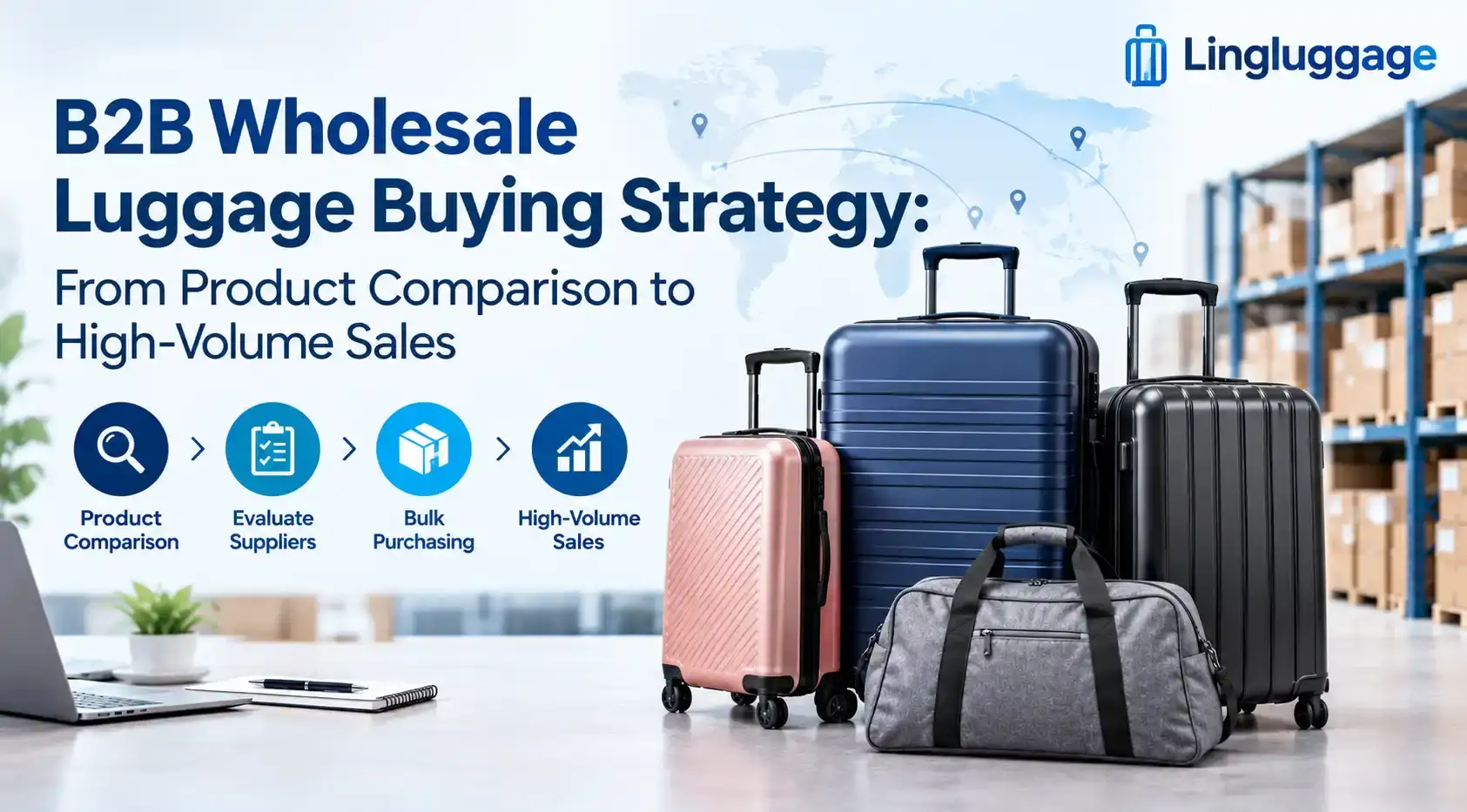
B2B Wholesale Luggage Buying Strategy: From Product Comparison to High-Volume Sales
Introduction: Why Smart Inventory Selection Matters in B2B Luggage
In the wholesale luggage business, the products you stock decide your cash flow, your return rate, and your reputation with retail customers. A poorly planned order of 2,000 units can sit in a warehouse for months, while a well-planned order can sell out within a single travel season. That is why distributors, importers, and retailers need a clear buying strategy before they place a bulk order with any factory.
The global travel market continues to recover and expand, and that growth is pushing steady demand for carry-on trolley bags, checked suitcases, and travel sets. At the same time, buyers are more price-aware and quality-focused than before. They compare materials, wheel systems, zipper brands, and warranty terms before they buy. As a wholesale buyer, you need to understand both sides: what end customers want, and what a factory can deliver at scale.
Market Trends and Bulk Buying Basics
Before comparing individual products, it helps to understand how bulk luggage buying works. Most factories quote prices based on order volume, and unit cost drops as quantity rises. However, ordering more is not always better. The right order size depends on your sales speed, storage space, and payment terms.
- Lightweight designs: Polycarbonate and ABS+PC hard shells remain popular because they reduce airline baggage weight issues.
- Expandable and multi-size sets: Buyers prefer 3-piece and 4-piece sets that offer better perceived value.
- Smart features: USB charging ports, TSA locks, and cup holders are now common requests in wholesale orders.
- Custom branding: Private label and OEM orders help distributors build their own brand instead of competing only on price.
Understanding Luggage Categorization: Trolley Bag vs. Suitcase
Many new buyers use the terms "trolley bag" and "suitcase" as if they mean the same thing. In practice, the two categories differ in structure, use case, and customer profile. Knowing the difference helps you build a balanced catalog and avoid ordering too much of one type. For a deeper breakdown, read our guide on Trolley Bag vs Suitcase: What Is the Difference for Retailers and Distributors?
Structural and Functional Differences
A trolley bag is usually a compact, wheeled bag with a telescopic handle, designed for cabin use or short trips. A standard suitcase is typically larger, built for checked baggage, and often carries more internal capacity and a stronger frame. Some suitcases have four spinner wheels, while many trolley bags use two or four wheels depending on the design.
| Feature | Trolley Bag | Standard Suitcase |
|---|---|---|
| Typical Size | 18 to 22 inches (cabin size) | 24 to 32 inches (checked size) |
| Main Use | Short trips, business travel | Long vacations, family travel |
| Weight | Lighter, easier to carry | Heavier, more storage |
| Price Range | Lower to mid-range | Mid to premium range |
| Shipping Volume | More units per container | Fewer units per container |
Product Variety Based on Customer Demand
Different customers look for different things. Frequent flyers want durable cabin bags. Families want large checked suitcases and matching sets. Students and budget travelers prefer affordable soft-side bags. When you plan your catalog, group products by customer need instead of by factory model number. This makes your store easier to browse and makes your buying decisions more data-driven.
Market Demand and Sales Data: Which Luggage Type Sells More?
One of the most common questions from distributors is simple: should we stock more trolley bags or more suitcases? The honest answer depends on your region, customer type, and sales channel. To see how the numbers compare, check our detailed analysis: Which Luggage Type Sells More? A Data-Driven Comparison for B2B Distributors
Trolley Bags vs. Suitcases: What the Data Usually Shows
In most markets, cabin-size trolley bags sell faster because they are cheaper, easier to store, and suitable for both business and leisure trips. Large suitcases usually generate higher revenue per unit, but they move more slowly and take up more warehouse space. Sets, especially 3-piece sets, often perform well on e-commerce platforms because they feel like better value to the customer.
- Trolley bags: Higher unit sales, faster turnover, lower margin per unit.
- Large suitcases: Lower unit sales, higher margin per unit, slower turnover.
- Luggage sets: Strong online performance, good for promotions and bundle offers.
Seasonal Demand and Customer Buying Patterns
Luggage demand is not flat across the year. Sales usually rise before summer holidays, school breaks, and major festivals. Business travel bags sell steadily throughout the year, while large family suitcases peak during holiday seasons. Plan your orders at least 60 to 90 days before peak season so production and shipping time do not cause you to miss the sales window.
Important Tips: Things to Know Before Buying
- Always request a physical sample before confirming a bulk order.
- Ask the factory for material test reports, especially for zipper strength and wheel durability.
- Confirm the production lead time in writing, including peak season delays.
- Compare total landed cost, not just the factory unit price.
- Start with a smaller trial order if you are working with a new supplier.
Key Factors to Consider Before Buying Luggage in Bulk
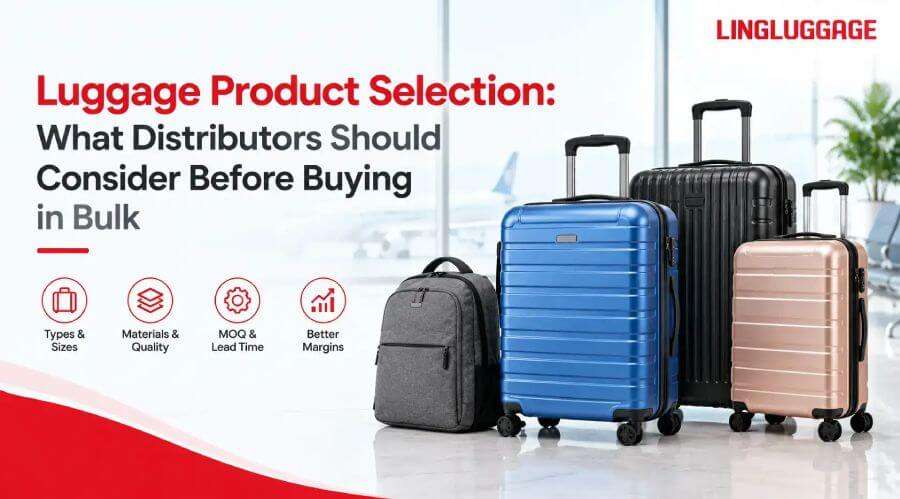
Once you know what your customers want, the next step is evaluating products and suppliers carefully. A low price means little if the luggage breaks after two trips. Our guide on Luggage Product Selection: What Distributors Should Consider Before Buying in Bulk covers this topic in more detail.
Material Quality, Durability, and Pricing Margins
Material is the biggest factor in product quality and cost. Here are the common options:
- ABS: Affordable and lightweight, but less impact-resistant.
- Polycarbonate (PC): Flexible, strong, and resistant to cracking. A popular mid-to-premium choice.
- ABS+PC blend: Balances cost and durability, widely used in wholesale orders.
- Polyester and nylon: Common for soft-side luggage, with good flexibility and lower cost.
Beyond the shell, inspect the wheels, handles, zippers, and lining. These parts fail first and cause most customer complaints. When calculating margins, include packaging, shipping, import duty, and expected return rates. A product with a lower factory price but a higher defect rate can reduce your real profit.
Supplier Evaluation Checklist
Choosing the right factory is as important as choosing the right product. Look for a supplier that offers consistent quality, clear communication, and flexible customization. Ask about production capacity, quality control steps, export experience, and available certifications. Visiting the factory, or arranging a video audit, can reveal a lot about how orders are actually handled.
Packaging, Shipping, and MOQ Strategies
Minimum Order Quantity (MOQ) affects your risk and your cost. Many luggage factories set MOQs per model or per color, so mixing too many variations can raise your total order size quickly. To manage this, consider the following approach:
- Limit your first order to a few best-selling colors such as black, navy, and grey.
- Ask whether the factory allows mixed sizes under one MOQ.
- Choose nested packaging for suitcase sets to save container space.
- Confirm carton labeling and barcode requirements before production.
Trolley vs. Suitcase Selection Guide for B2B Buyers
After reviewing quality and supplier factors, you need to decide how much of each luggage type to buy. This depends heavily on who your customers are. For a step-by-step approach, see B2B Guide to Selecting the Right Luggage Type: Trolley vs Suitcase
Target Audience Mapping
| Customer Type | Preferred Product | Key Buying Factors |
|---|---|---|
| Business Travelers | Cabin trolley bags | Lightweight, durable, professional look |
| Vacationers | Medium to large suitcases | Capacity, style, color options |
| Family Travelers | Luggage sets (3 to 4 pieces) | Value for money, matching design |
| Students and Budget Buyers | Soft-side trolley bags | Low price, easy handling |
Practical Decision Criteria for Choosing the Right Product Mix
A simple starting point for many distributors is a 60/40 split, with about 60 percent cabin-size trolley bags and 40 percent medium and large suitcases. You can then adjust the ratio based on your actual sales data after the first two or three months. Track which sizes, colors, and price points sell fastest, and reorder accordingly. This approach reduces dead stock and keeps your catalog focused.
Wholesale Inventory Strategy: Deciding What to Stock for Your Business
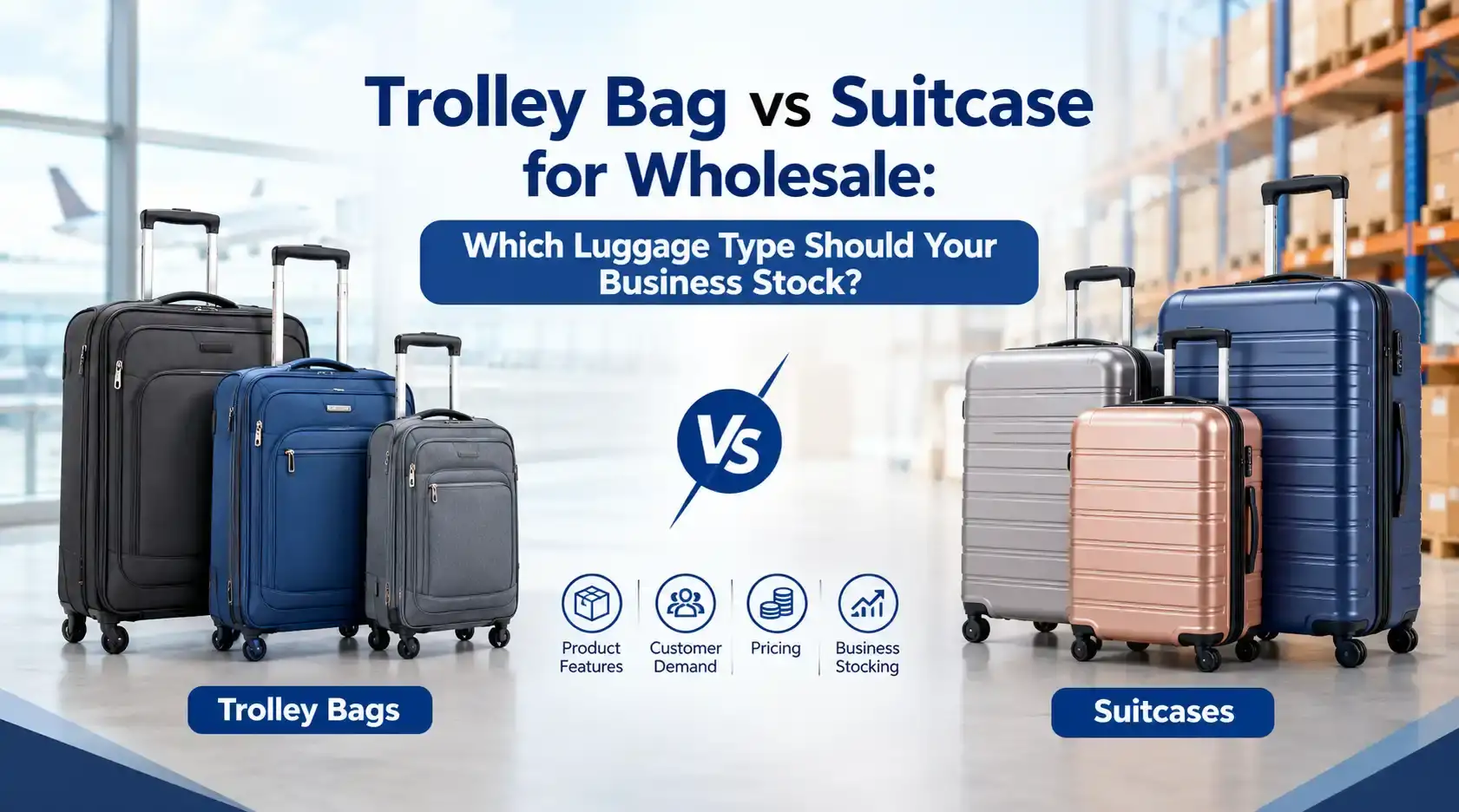
A good product mix is only useful if your inventory is managed well. Overstocking ties up capital, while understocking causes lost sales. For a strategy focused on stocking decisions, read Trolley Bag vs Suitcase for Wholesale: Which Luggage Type Should Your Business Stock?
Warehouse Inventory Management
Luggage takes up a lot of space, so storage planning matters. Nesting suitcases where possible, labeling shelves by size and color, and using a simple inventory system can save time and reduce picking errors. Review your stock levels monthly and flag any item that has not moved in 90 days so you can run a discount or bundle promotion before it becomes dead stock.
Balancing High-Margin and Fast-Moving Items
Not every product in your catalog needs to do the same job. Fast-moving items, such as cabin trolley bags, bring steady cash flow. High-margin items, such as premium polycarbonate suitcases and large sets, improve overall profitability. A healthy catalog uses both: fast sellers to keep money moving, and premium products to raise your average order value.
Quick Updates for Wholesale Buyers
- Lightweight is trending: More buyers are asking for suitcases under 3 kg for cabin size.
- Custom branding is growing: Private label orders are becoming common even at moderate MOQs.
- Sustainability matters: Recycled-material shells are gaining interest from retail chains.
- Plan early: Book production slots well before peak season to avoid delays.
Conclusion: Build a Smarter Luggage Buying Strategy
Successful B2B luggage buying comes down to a few clear steps. Understand the difference between trolley bags and suitcases, study what actually sells in your market, evaluate material quality and suppliers carefully, and match your product mix to your customer base. Then manage your inventory with discipline so that fast-moving and high-margin products work together.
When you are ready to move from planning to ordering, working with an experienced manufacturer makes the process easier. A reliable factory can support custom designs, flexible MOQs, and consistent quality across repeat orders.
Ready to Start Your Wholesale Luggage Order?
Contact our sales team today to discuss your requirements, get factory pricing, and request our latest wholesale catalog.