


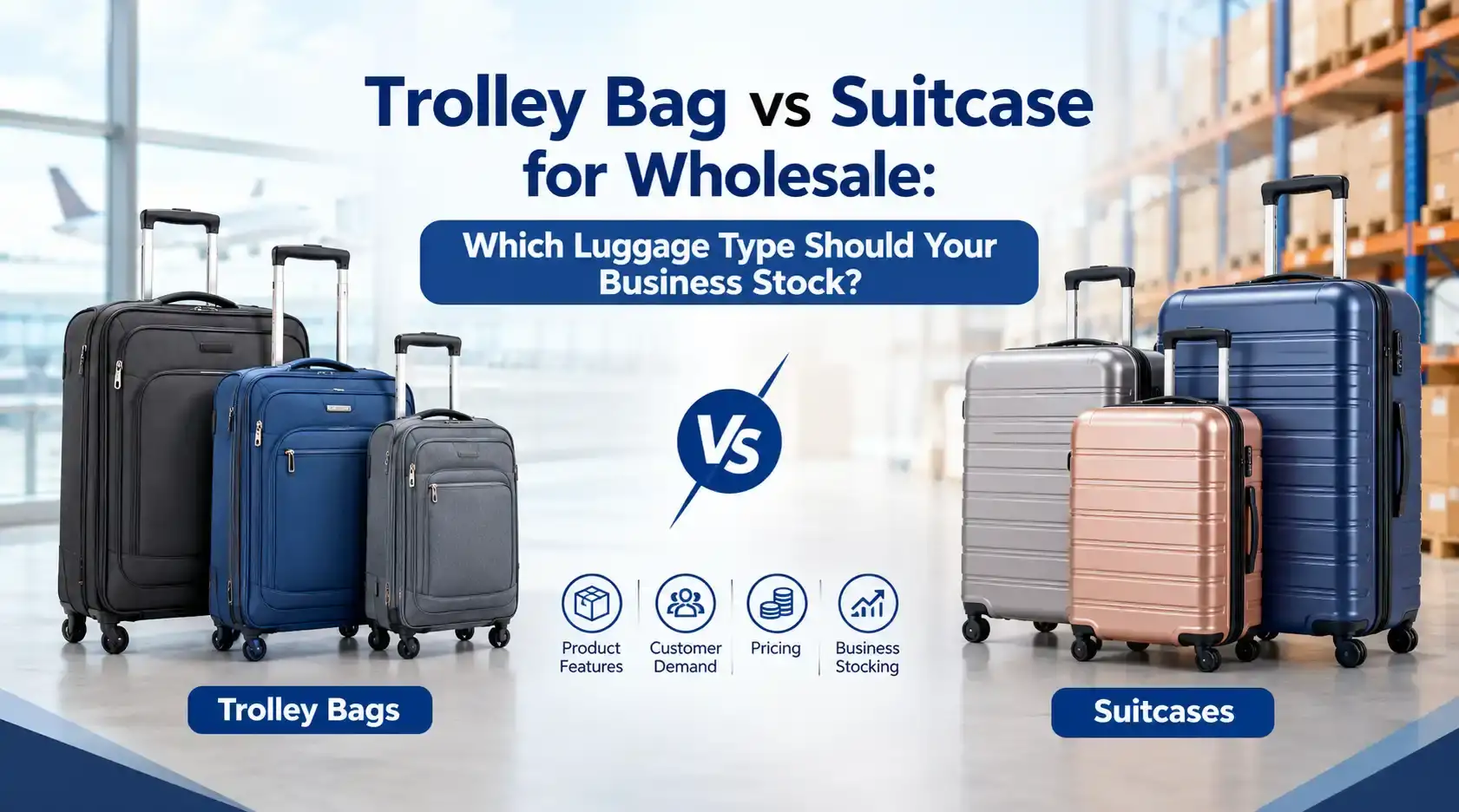
Trolley Bag vs Suitcase for Wholesale: Which Luggage Type Should Your Business Stock?
Introduction
At Lingluggage, choosing the right luggage range is one of the most important decisions a wholesale buyer, distributor, or retailer makes. Luggage is a high-value, bulky product. A wrong mix of styles ties up warehouse space, slows cash flow, and leads to markdowns. A right mix turns over quickly and brings repeat orders.
One of the most common questions buyers ask factories is simple: should we stock trolley bags or suitcases? In 2026, the answer is more nuanced than it used to be. Travel demand continues to recover and grow, airlines keep tightening cabin baggage rules, and buyers now expect lighter materials, smarter features, and more sustainable products. This guide compares both product types from a B2B point of view so you can build a range that sells.
Trolley Bag vs Suitcase: Key Definitions
What Is a Trolley Bag?
A trolley bag is a wheeled bag with a telescopic pull handle, designed mainly for easy rolling through airports, stations, and hotels. In many markets, the term refers to cabin-size luggage, usually between 18 and 22 inches, although larger trolley bags exist. Trolley bags can be hard-shell or soft-shell, and many modern designs include expandable zippers and front laptop compartments.
What Is a Suitcase?
A suitcase is a broader category. It includes hard-shell and soft-shell cases in cabin, medium, and large check-in sizes, typically from 20 to 32 inches. Suitcases are built for greater capacity and are often sold in matching sets of two, three, or more pieces.
Terminology Differences by Region
The two terms overlap heavily. In South Asia and the Middle East, "trolley bag" is a common retail term for any wheeled case. In Europe and North America, "suitcase," "spinner," and "carry-on" are more common. When you write purchase orders or product listings, always specify size in inches or centimeters, shell material, and wheel type to avoid confusion with your supplier.
Main Differences at a Glance
|
Factor |
Trolley Bag |
Suitcase |
|---|---|---|
|
Typical size |
18 to 24 inches |
20 to 32 inches |
|
Capacity |
Short trips, cabin use |
Longer trips, family travel |
|
Common materials |
Polyester, nylon, ABS, PP |
ABS, polycarbonate, PP, aluminum |
|
Weight |
Lighter |
Heavier, especially in large sizes |
|
Price range |
Entry to mid |
Mid to premium |
|
Main customer |
Business travelers, students, short-trip travelers |
Families, long-haul travelers, gift buyers |
|
Sold as |
Singles, small sets |
Singles and nested sets |
Cabin vs Check-In Categories
Cabin-size bags remain the fastest-growing category because more travelers avoid checked baggage fees. Check-in sizes still matter for families, students going abroad, and long-haul travel. A strong wholesale range covers both.
Market Demand in 2026: Which Sells More?
Traveler Segments
- Business travelers: prefer cabin-size trolley bags with laptop compartments, lightweight shells, and professional colors.
- Families and leisure travelers: buy medium and large suitcases, often in sets.
- Students and young travelers: want affordable, colorful, lightweight options and often shop online.
- Airline crew and frequent flyers: value durable wheels, strong handles, and repairable parts.
Seasonal Demand
Luggage sales follow clear seasonal patterns. Holiday travel, summer vacations, back-to-school periods, wedding seasons, and year-end gifting all create demand peaks. Plan your orders so stock arrives at least six to eight weeks before each peak, allowing for production, shipping, and customs clearance.
Regional Preferences
- Middle East and Africa: strong demand for durable, large suitcases and value-priced sets, plus bright colors.
- Europe: preference for lightweight hard-shell spinners, recycled materials, and clean design. Sustainability claims are increasingly scrutinized.
- North America: strong online sales, expandable carry-ons, and features like USB ports and tracker pockets.
- Southeast Asia: growing demand for stylish cabin bags driven by budget airline travel.
Overall, cabin trolley bags tend to move faster by volume, while larger suitcases and sets often bring higher order value. Most successful distributors stock both.
Profit Margin and Pricing Considerations
Wholesale Price Ranges
Factory pricing depends on material, size, wheel and handle quality, lining, and customization. Soft-shell polyester trolley bags sit at the lower end. ABS and PP hard-shell suitcases sit in the middle. Polycarbonate, aluminum, and premium branded builds sit at the top.
Margin Potential
- Trolley bags: lower unit price, faster turnover, lower risk per piece. Good for building cash flow.
- Suitcases and sets: higher unit price and better margin per sale, but they need more storage space and sell more slowly outside peak seasons.
Fast Movers vs High-Margin Items
A practical approach is to use fast-moving cabin trolley bags to keep inventory turning, and add medium-to-large suitcases and sets to lift average order value. Check current freight rates and any tariff changes in your destination market before setting final retail prices, since logistics costs in 2026 can shift margins more than factory price differences.
Materials and Build Quality
Shell Materials
- ABS: affordable and rigid, but can crack under heavy impact.
- Polycarbonate (PC): lightweight, flexible, and impact-resistant. A premium choice.
- PP (polypropylene): very light and flexible, popular for mid-to-premium lines.
- Polyester and nylon: common for soft-shell bags, valued for lighter weight and external pockets.
- Recycled content: recycled PC and recycled PET fabrics are now a major selling point, especially for European buyers. Ask suppliers for documentation instead of relying on marketing claims.
Components That Decide Returns
Most luggage complaints come from components, not shells. Pay close attention to:
- Wheels: double spinner wheels with smooth bearings and quiet rolling.
- Zippers: reputable brands and reinforced stitching, especially on expandable models.
- Handles: telescopic handles with stable locking at multiple heights and no wobble.
- Locks: TSA-approved combination locks for travel to the United States.
Warranty and Return Risk
Ask the factory about warranty terms, spare parts availability, and defect rate commitments. A supplier who can provide replacement wheels or handles reduces your after-sales burden and protects your brand.
Shipping, Storage, and MOQ Factors
Nested Sets vs Single Units
Nested sets of two or three suitcases use container space far more efficiently than single units, which lowers the freight cost per piece. Trolley bags in cabin sizes are easier to carton and ship, but hard-shell cabin cases do not nest as tightly as larger sets.
Warehouse Space
Large suitcases take up substantial space. If your storage is limited, begin with cabin and medium sizes and add large sizes based on sales data.
Typical MOQ
MOQ varies by factory, material, and customization level. Stock designs often have lower MOQs, while custom colors, logos, or new molds require higher quantities. Always confirm MOQ per size and per color, and ask whether mixed-size orders are accepted.
Packaging and Carton Size
Request carton dimensions and weights before ordering so you can calculate container loading. Ask about e-commerce-ready packaging, since many online sellers need cartons that can survive parcel carriers.
Which Luggage Type Fits Your Business Model?
- Retail stores: a full range with cabin, medium, and large sizes, plus a few sets for display impact.
- Online and Amazon sellers: focus on cabin trolley bags and lightweight spinners with strong photos, clear size specifications, and compliance with marketplace airline-size claims.
- Travel agencies and corporate gifting: simple, professional cabin bags with custom logos and neutral colors.
- Hotels and promotional buyers: durable, mid-priced suitcases and trolley bags with branding options.
How to Build a Balanced Luggage Range
A balanced range for most distributors looks something like this:
- Core cabin trolley bags (20 to 22 inches): your highest-volume item.
- Medium suitcases (24 to 26 inches): the all-purpose seller.
- Large suitcases (28 to 30 inches): for families and long trips.
- Sets of three: to raise average order value and give retail displays more impact.
Color, Size, and Style
Keep neutral colors such as black, grey, navy, and silver as your base, then add two or three seasonal or trend colors. Too many colors increase inventory risk.
Features Buyers Expect in 2026
- Lightweight shells that help travelers stay under airline weight limits
- Expandable compartments for cabin bags
- Built-in tracker pockets or tracker-friendly design for item-finder devices
- Easy-access laptop or tablet compartments
- Recycled or lower-impact materials, with clear documentation
- Replaceable wheels and repair-friendly design
Private Label and OEM Options
Private label gives you pricing control and brand loyalty. Start with one or two signature models under your own brand, and keep the rest of your range as stock designs to limit risk.
How to Choose a Reliable Luggage Manufacturer
Quality Control and Certifications
Look for factories with documented quality control, in-house testing for wheels, handles, and zippers, and relevant management or social compliance certificates. Ask for test reports and, if you sell in regulated markets, confirm chemical and material compliance requirements before production.
Sample Ordering
Always order samples before a bulk order. Test them yourself: roll them over rough surfaces, extend and retract the handle many times, and load them to the stated capacity.
Customization Capability
Confirm whether the factory supports OEM and ODM work, custom colors, logos, interior lining, and packaging. Ask about mold costs and lead times for new designs.
Questions to Ask Before Bulk Orders
- What is the MOQ per size and color?
- What is the lead time for stock and custom orders?
- What are the carton dimensions and nesting options?
- What is the defect rate policy and warranty?
- Can you provide spare parts?
- Which certifications and test reports can you share?
Frequently Asked Questions
Which luggage type has higher demand in wholesale?
Cabin-size trolley bags usually sell in higher volume because they suit short trips, business travel, and budget airline rules. Large suitcases and sets generate higher order value. Most buyers stock both.
Is hard-shell or soft-shell better for bulk buyers?
Hard-shell luggage protects contents better and looks more modern, so it dominates the mid-to-premium market. Soft-shell offers extra pockets and flexibility and often sells well to value-focused and business customers. A mix of both is safest.
What is the typical MOQ for luggage?
MOQ depends on the factory and the level of customization. Stock models are typically more flexible, while custom designs and private label orders require higher quantities. Always confirm with your supplier.
Conclusion
There is no single winner in the trolley bag vs suitcase decision. Trolley bags give you faster turnover and lower risk, while suitcases and sets bring higher order value and stronger margins. In 2026, the best-performing wholesale ranges combine both, focus on lightweight and durable materials, and respond to growing buyer interest in smart features and sustainability.
If you are planning your next luggage order, work with a manufacturer that offers flexible MOQs, reliable quality control, and OEM support. Request a catalog, ask for samples, or contact our team for a quote tailored to your market.
More blogs like this:
B2B Guide to Selecting the Right Luggage Type: Trolley vs Suitcase
Which Luggage Type Sells More? A Data-Driven Comparison for B2B Distributors
Trolley Bag vs Suitcase: What Is the Difference for Retailers and Distributors?
Luggage Product Selection: What Distributors Should Consider Before Buying in Bulk